2
The Prompter’s Secrets
Yesterday, we ascended the legendary staircase of the Palais Garnier together. Today, another window in our calendar opens, inviting us to descend underground and uncover how the magic of opera is crafted down to the finest detail. As the spotlight shines on the singers, a discreet presence in the shadows ensures the seamless flow of the performance: the prompter.

A Hidden Profession
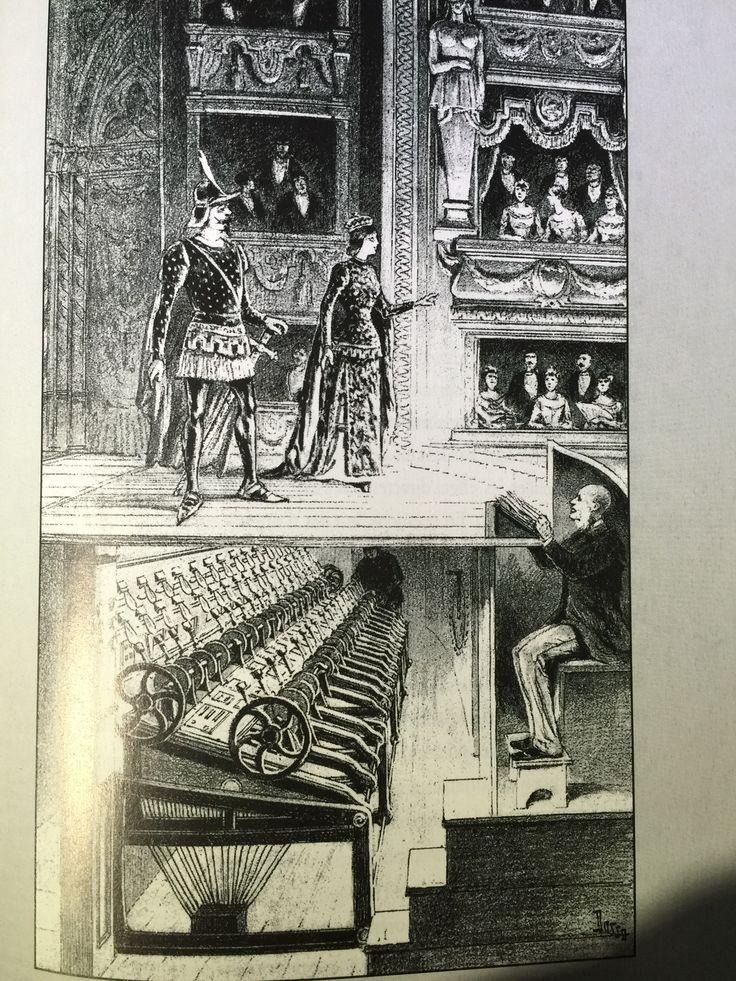
The prompter, tucked away in a small opening at the front of the stage—between the orchestra pit and the wings—plays a vital yet unseen role. Their task is to guide singers when a word or phrase slips their mind. Following an annotated libretto, they anticipate tricky passages and intervene with a whispered cue when needed.
The audience is swept away by the spectacle unfolding before them, unaware of the prompter hidden in a narrow compartment, quietly ensuring every moment runs flawlessly. They are the keeper of perfect pitch and the unseen guardian of the audience’s enjoyment.
To immerse yourself in the prompter’s world, we’ve curated a playlist featuring opera’s most exquisite voices. In Maurice Ravel’s Trois beaux oiseaux du paradis and Verdi’s iconic Va, pensiero from Nabucco, the voices seem to brush against each other, guiding one another like a faltering singer saved by a whisper from the darkness.
Did you know?
In 1932, the first live radio broadcasts of opera were transmitted from an antenna on the Eiffel Tower, beginning with Henri Rabaud’s Mârouf, savetier du Caire. But nearly half a century earlier, microphones placed in the prompter’s box had already made it possible to relay operas. In 1881, Meyerbeer’s Les Huguenots was heardby a select few listening from the scenery workshop—making the first-ever live opera broadcast!
Tomorrow, we’ll venture even further backstage at the Opéra, where all the unseen magic comes to life.